
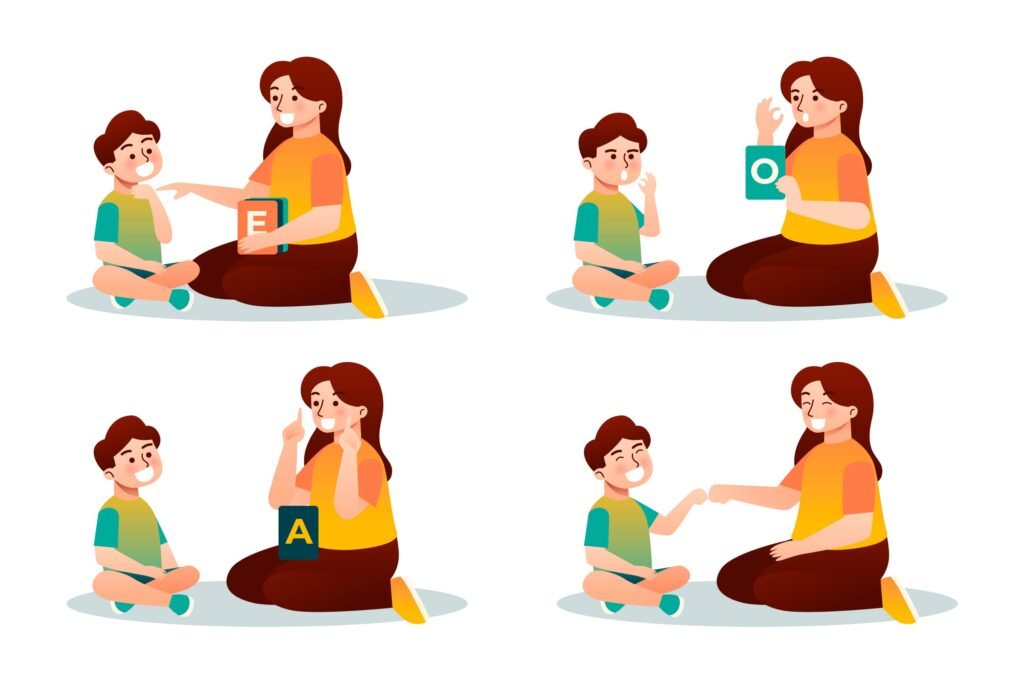
Many parents worry about their toddler’s speech development. It is common to hear phrases like “Every child talks in their own time” or “Boys speak later.” While these statements can sometimes be true, they should not delay professional guidance when speech development appears significantly behind expected milestones.
Understanding when to observe and when to seek help can make a meaningful difference in a child’s communication and overall development.
What Is Speech Delay?
Speech delay occurs when a child does not develop speech and language skills within the expected age range. This may involve delayed talking, limited vocabulary, difficulty understanding language, or problems using sounds correctly.
Speech delay can affect:
- Expression (talking)
- Understanding (listening and comprehension)
- Social communication
Normal Speech Milestones in Toddlers
While children develop at different speeds, general speech milestones include:
- 12 months: Uses sounds, babbles, responds to name
- 18 months: Says a few meaningful words, follows simple commands
- 2 years: Uses two-word phrases, vocabulary of 50 or more words
- 3 years: Speaks in short sentences, speech mostly understood by others
Missing these milestones consistently may indicate a speech delay.
When Waiting May Be Appropriate
In some cases, brief monitoring may be reasonable if:
- The child understands instructions well
- The child uses gestures like pointing or waving
- There is steady progress, even if slower than peers
- No concerns in hearing, play, or social interaction
However, waiting should always be accompanied by professional guidance.
When to Seek Help Immediately
You should consider a speech evaluation if your toddler:
- Does not babble by 9 months
- Has no meaningful words by 18 months
- Does not combine words by 2 years
- Has poor eye contact or limited social interaction
- Does not respond to name or sounds
- Loses previously acquired speech skills
Early assessment does not mean therapy is always required, but it provides clarity.
Possible Causes of Speech Delay
Speech delay may occur due to:
- Hearing difficulties
- Oral motor challenges
- Developmental delay
- Autism Spectrum Disorder
- Prematurity or birth-related factors
- Limited language exposure
Identifying the cause helps plan appropriate intervention.
How Speech Therapy Helps
Speech therapy supports:
- Vocabulary development
- Sound production and clarity
- Understanding and use of language
- Social communication skills
Therapy is play-based, age-appropriate, and customized to the child’s needs.
Importance of Early Intervention
The earlier speech delay is addressed, the better the outcome. Early therapy takes advantage of brain plasticity and helps prevent frustration, behavior issues, and learning difficulties later.
Supporting Speech Development at Home
Parents can support speech development by:
- Talking to the child throughout the day
- Reading picture books together
- Responding to sounds and attempts to communicate
- Limiting screen time
- Encouraging play and interaction
Professional guidance ensures these efforts are effective.
Final Thoughts
Speech delay does not always mean a serious problem, but ignoring early signs can delay progress. If you are unsure whether to wait or seek help, a professional evaluation is the safest step.
Early guidance provides reassurance, direction, and the best opportunity for your child to develop strong communication skills.
Need Speech Evaluation?
If you have concerns about your toddler’s speech development, early assessment and guidance can make a lasting difference.